
Knowledge at Risk: Introduction
Something is quietly happening across the manufacturing sector, and most companies will not notice it until the damage is already done.
This series, The Knowledge at Risk: A Manufacturing Leader’s Guide to Protecting What Your Operations Depend On, is written for manufacturing leaders who are beginning to ask the right questions about what their operations depend on and what happens when the people who carry that knowledge are no longer there. Over 14 posts, the series covers
- The scope of the problem
- The frameworks that address the problem
- The tools that make the work manageable
- The regional resources available to manufacturers who are ready to act.
For decades, small and mid-sized manufacturers built their operations on a foundation of informal expertise.
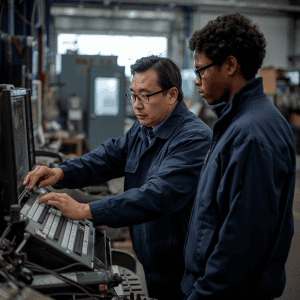
- Senior operators knew which machines ran hot on humid days.
- Veteran machinists knew the sequence adjustments that written procedures never captured.
- Process engineers carried in their heads the reasoning behind decisions that documentation described only as steps.
That informal expertise worked when the people who held it stayed. It becomes a liability the moment they leave. According to dirac.com’s guide to preserving tribal knowledge in manufacturing, U.S. manufacturers lose an estimated $92 billion annually to human error-related downtime, much of it tied directly to knowledge that was never captured, never transferred, and never made accessible to the people who needed it.
The convergence of demographic change, accelerating technology adoption, and global supply chain realignment has moved knowledge management from a best practice to a business continuity requirement. Manufacturers that treat critical operational knowledge as an informal asset are exposed to risks that compound quietly over time, until a retirement, a resignation, or a reorganization makes the exposure visible.
The industrial companies that will compete effectively in the years ahead are the ones that begin treating knowledge as a managed asset before the loss becomes operational.
The numbers behind this crisis are more specific than most manufacturing leaders realize.
The next post examines the workforce data behind the Great Retirement and what the scale of that transition means for manufacturers.