
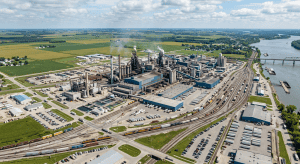
Illinois is not an outlier. It is a preview of what demographic and economic pressure looks like for manufacturers across the Midwest.
According to the Illinois Policy Institute, between 2025 and 2033, the state is projected to lose more than 450,000 prime-age workers, those between the ages of 25 and 65, alongside a broader outmigration of 600,000 residents. Illinois projects annual GDP growth of 1.4%, lagging behind the Midwest average of 1.8% and the national average of 2.2%. In 2023 alone, 218 businesses relocated to other states.
For small and mid-sized manufacturers operating in this environment, the workforce pipeline is narrowing at the same time the experienced workforce is exiting. That combination does not allow for slow responses to knowledge risk.
Research published by the World Manufacturing Forum reinforces why this matters beyond individual facilities: every dollar in final sales of manufactured products supports $1.33 in output from other sectors, the largest economic multiplier of any industry.
When a manufacturing company loses critical operational knowledge and production quality or consistency suffers as a result, the impact moves outward through suppliers, distributors, and the broader regional economy. A single facility’s knowledge gap does not stay inside that facility.
For Midwestern manufacturers, knowledge management is not only an internal operational concern. It is a contribution to regional economic stability.
The demographic and economic data make a compelling case for urgency. But the technology landscape adds a layer of complexity that manufacturers cannot afford to set aside.
The next post examines how Industry 4.0 technologies change the way knowledge is generated, captured, and managed in a manufacturing environment.